
The Best Things to do in Stuttgart Germany
Discover the best things to do in Stuttgart. Plan your visit, including automobile museums, vineyards, palaces, mineral baths, and panoramic views.
If you’re visiting for the first time, these are my recommendations for the 10 best things to do in Stuttgart. I’ve also included a few more worthwhile stops if you have extra time.
The Quick List
- Explore Schlossplatz and Stuttgart’s historic center
- Visit the Mercedes-Benz Museum
- Visit the Grabkapelle and the surrounding vineyards
- Ride the Zacke to Santiago-de-Chile-Platz
- Take in the view from the Fernsehturm
- Explore the Porsche Museum
- Shop at the Markthalle
- Visit Wilhelma
- See the Weißenhof Estate
- Soak in Stuttgart’s mineral Baths
The 10 best things to do in Stuttgart
01. Explore Schlossplatz and Stuttgart’s historic center
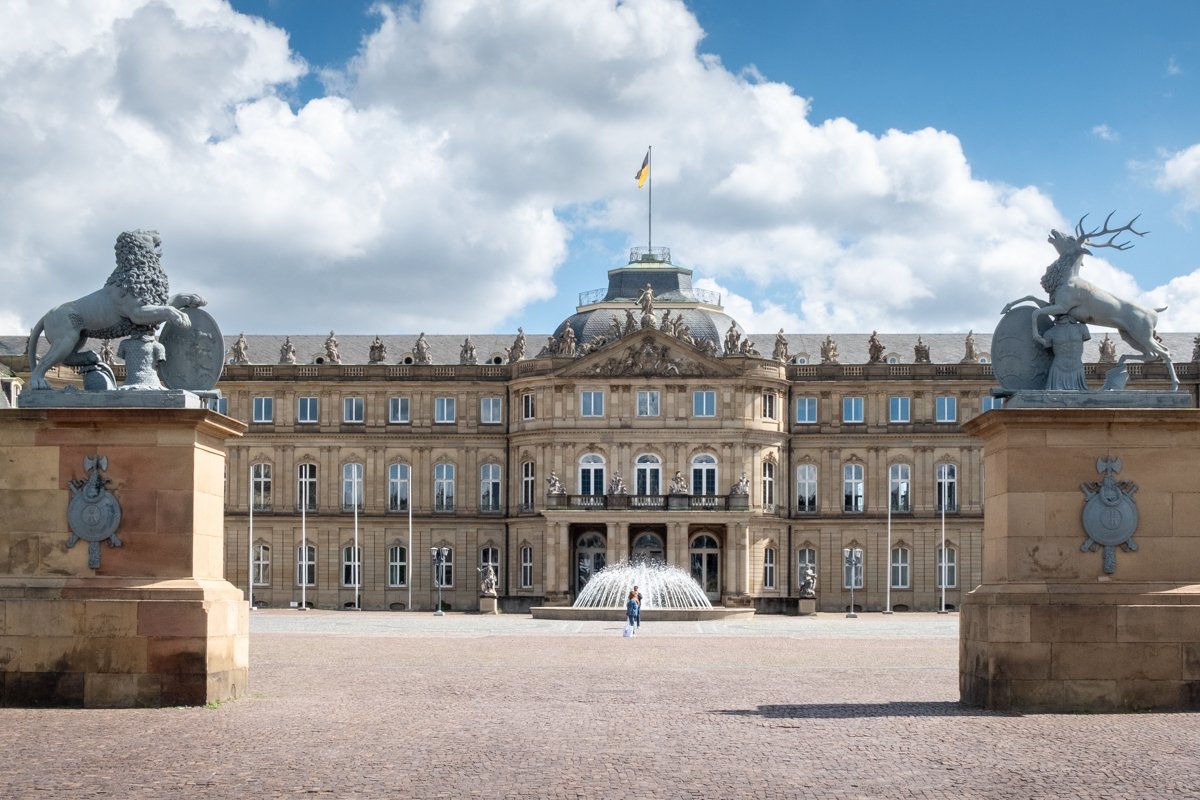
Start at the Schlossplatz. This is Stuttgart’s grand central square dominated by the Neues Schloss (New Palace). Built for the rulers of Württemberg, the baroque palace now houses government offices.
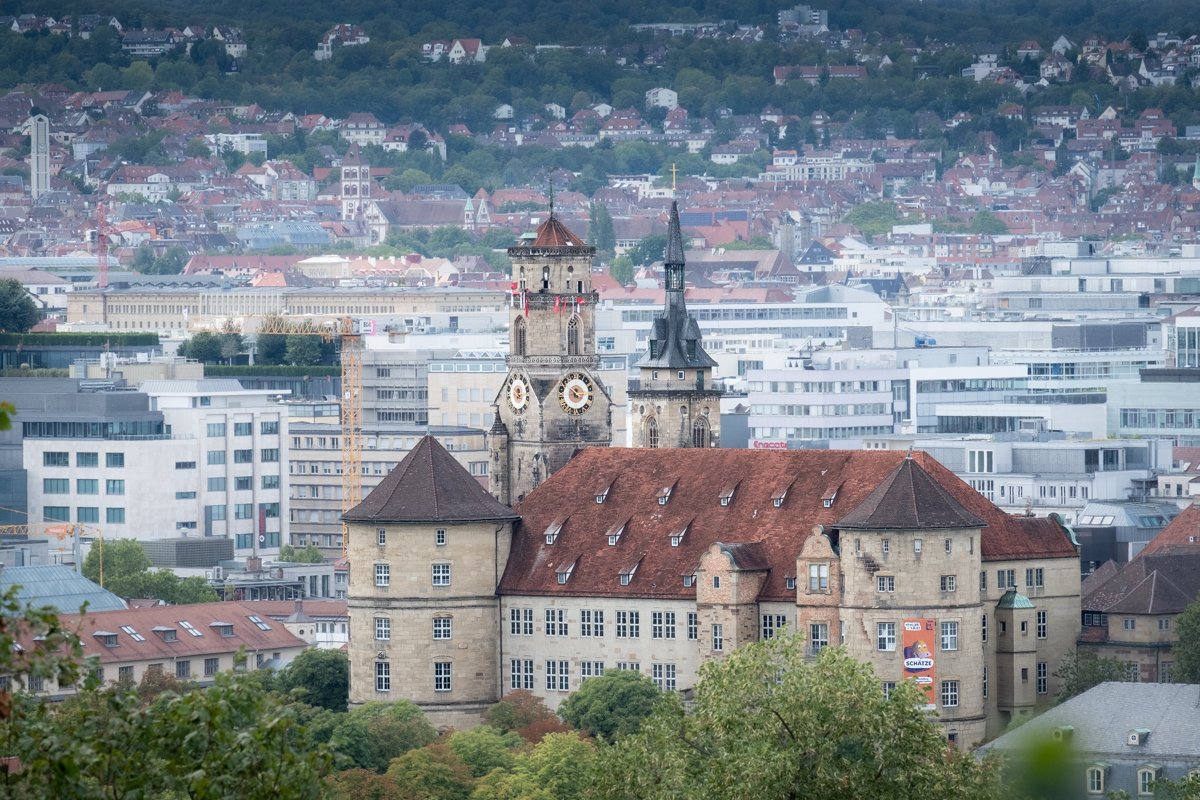
Then head to the Altes Schloss (Old Castle). The Altes Schloss stands on a site tied to Stuttgart’s beginnings. A stronghold here once protected the nearby Stutengarten, the horse stud that later gave Stuttgart its name. The castle evolved into the Renaissance palace you see today. Even if you skip the museum inside, step into its quiet arcaded courtyard.
Continue to Schillerplatz. It’s one of the most atmospheric corners of the old center. It’s surrounded by historic buildings, including the Stiftskirche.
You can see the heart of Stuttgart’s historic center in under an hour.
Know before you go
- Allow: 45-60 minutes
- Cost: Free
- Best time: Morning for quieter photographs or late afternoon for more atmosphere
- Getting there: Take the U-Bahn to Schlossplatz
- Pair it with: The Markthalle or the Landesmuseum Württemberg in the Altes Schloss
02. Visit the Mercedes-Benz Museum
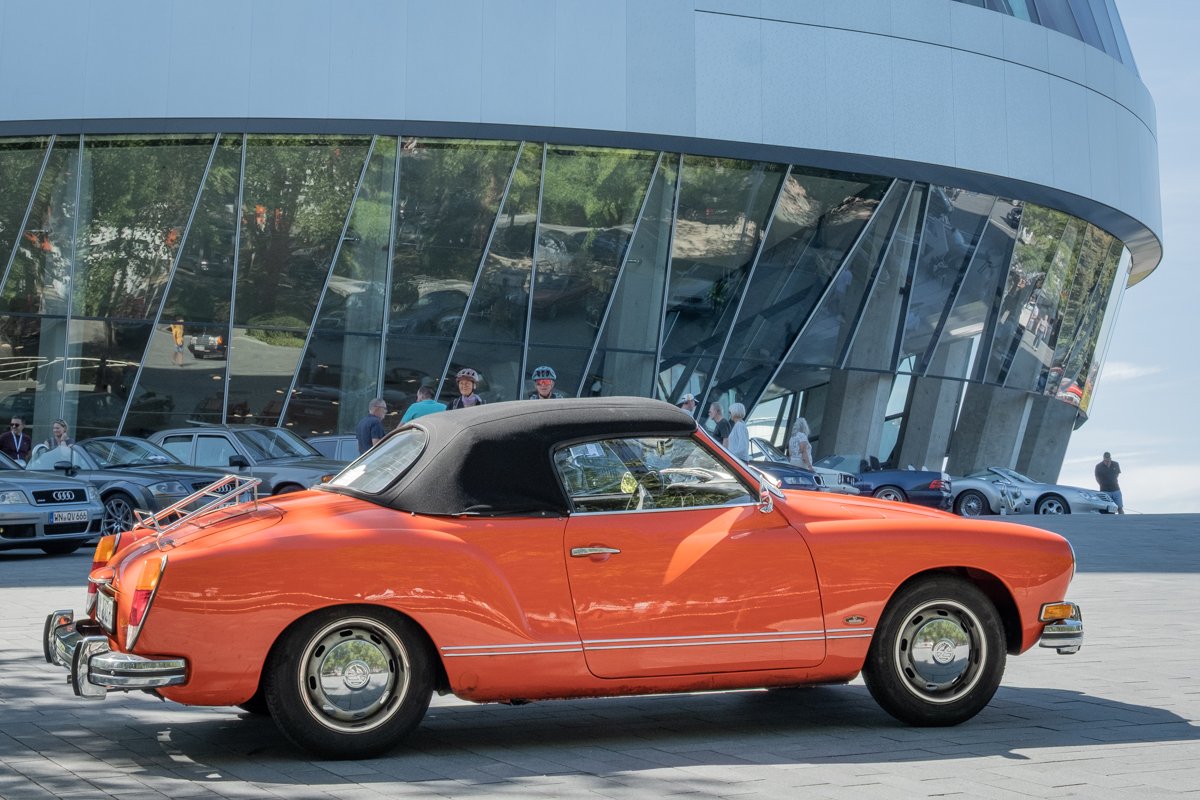
Even if you’re not a car buff, the Mercedes-Benz Museum is one of Stuttgart’s must-see attractions. It traces the story of the automobile from its earliest days to the present.
Take the elevator to the top and work your way down through nine levels. Along the way you’ll find around 160 vehicles like the famous Silver Arrows racing cars.
Don’t rush this one. There’s plenty here beyond engines and horsepower. The exhibits place the cars into the context of the world changing around them.
Know before you go
- Allow: 2½ to 3 hours, longer for serious car enthusiasts
- Cost: €16 for adults, reduced tickets available
- Hours: 9 am-6 pm; last admission at 5:20 pm
- Getting there: S-Bahn to Bad Cannstatt, then bus 45 to Mercedes-Benz Welt.
- Pair it with: Bad Cannstatt’s old town
03. Visit the Grabkapelle and walk Stuttgart’s vineyards
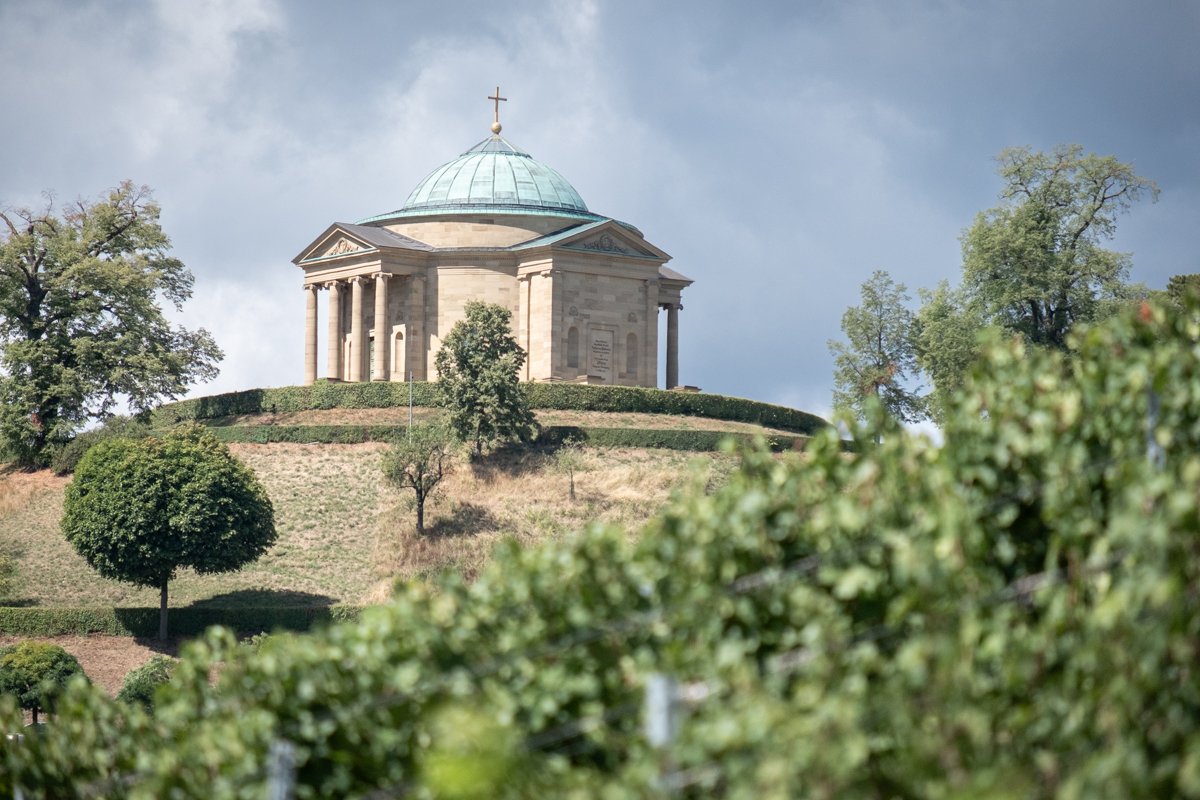
Head to the Grabkapelle auf dem Württemberg, perched high above the Neckar Valley.
King Wilhelm I built the chapel as a memorial to his wife, Queen Katharina, after her death in 1819. The royal couple lie in the crypt below.
After visiting the chapel, walk through the surrounding vineyards. Head toward Uhlbach or Untertürkheim.
It’s a beautiful walk and the perfect way to explore Stuttgart’s wine country. Sample local wines and finish your outing with a meal at a traditional Weinstube or Besenwirtschaft.
Know before you go
- Allow: 1½ to 3 hours, depending on how much of the vineyards you walk
- Cost: The viewpoints and vineyard paths are free; there is a small admission charge to enter the chapel
- Best Time: Late afternoon or early evening, especially in late summer and autumn
- Getting there: Take S-Bahn S1 to Untertürkheim and bus 61 to Rotenberg. From the village, it’s a short uphill walk. Parking near the chapel is limited. If you can’t find a spot nearby, park outside of town at Parkplatz Egelseer Heide and walk from there
- Pair it with: The Stuttgart Wine Museum and Vinothek in Uhlbach
04. Ride the Zacke to Santiago-de-Chile Platz
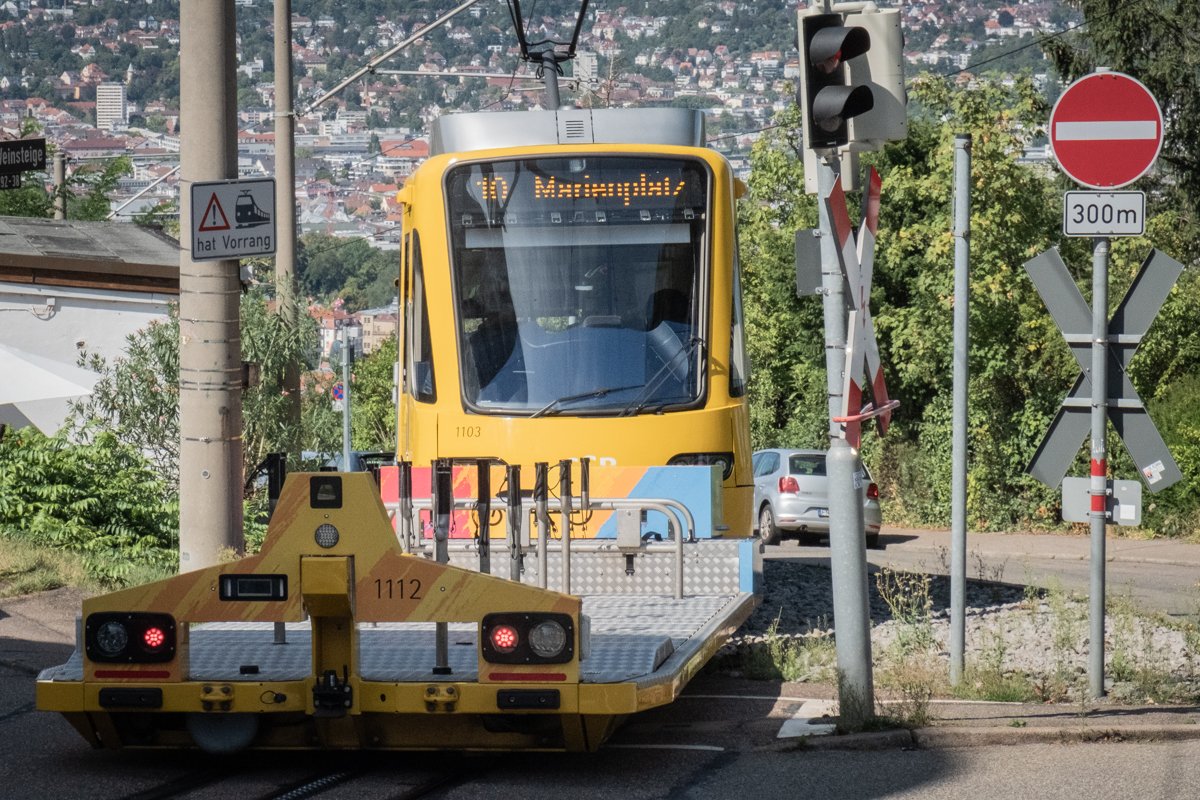
One of the most distinctive ways to experience Stuttgart’s hills is aboard its historic rack railway. The Zahnradbahn, or Zacke, has been climbing from Marienplatz toward Degerloch since 1884. It is still part of Stuttgart’s everyday public transportation system.
Take the Zacke uphill from Marienplatz and get off at Haigst. From there, it’s only a few steps to Santiago-de-Chile-Platz. The small hillside square has one of the best views across Stuttgart’s basin.
The view isn’t the only surprise. The square has a Moai sculpture from Easter island and other monuments representing Chile.
Know before you go
- Allow: 45-60 minutes
- Cost: Covered by a normal VVS public-transport ticket
- Best Time: Late afternoon for softer light and views across the city
- Getting there: Take the Zacke uphill from Marienplatz and get off at Haigst
- Pair it with: Marienplatz before the ride, or continue uphill to the Zahnradbahnhof and catch Bus 70 to the Fernsehturm
05. Take in the view from the Fernsehturm
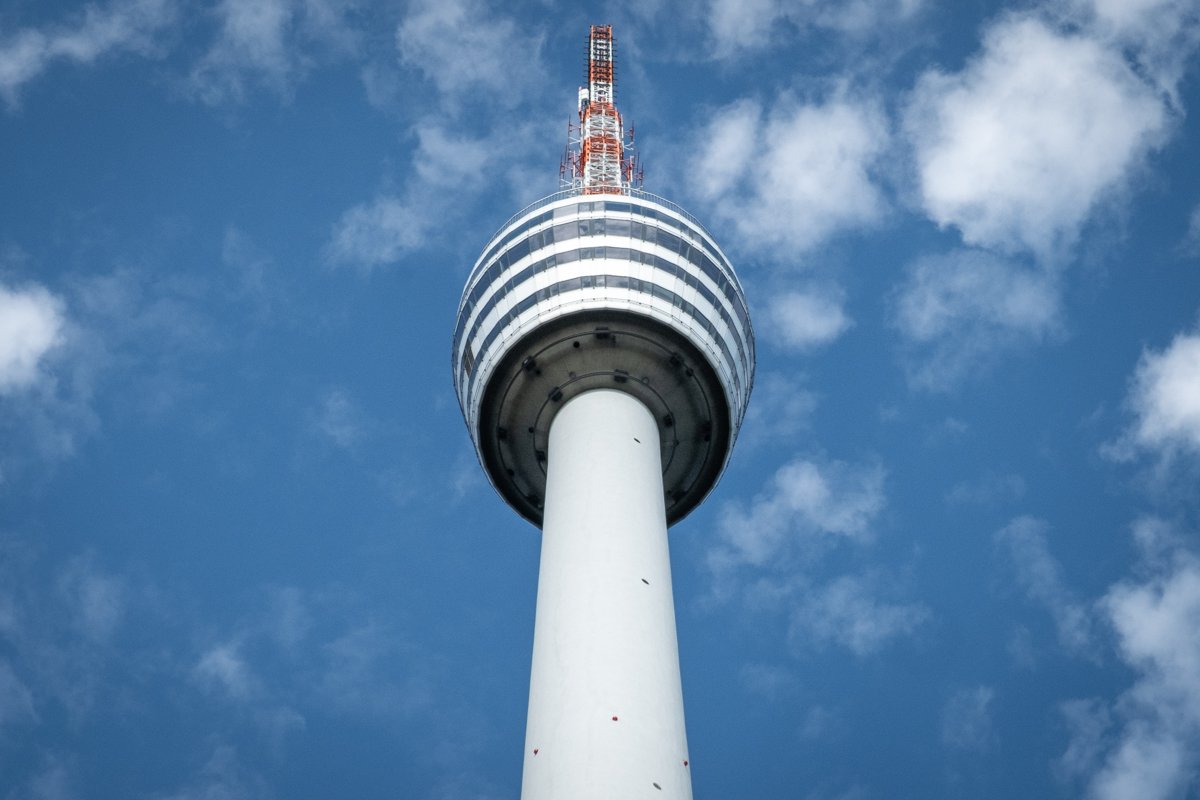
For the most expansive view of Stuttgart, head to the Fernsehturm. Stuttgart’s TV tower rises above the wooded hills south of the city center.
Opened in 1956, the television tower was the first of its kind in the world. It’s a reinforced concrete tower with an observation deck and restaurant at the top. Its design became the model for television towers built around the world.
An elevator takes you up to the viewing platforms where you can see Stuttgart from above. On a clear day, the view extends far beyond the city.
Know before you go
- Allow: 45-60 minutes
- Cost: €12.50 for adults
- Best Time: Late afternoon into sunset.
- Getting there: U-Bahn to Ruhbank (Fernsehturm) or Bus 70 from Degerloch.
- Pair it with: Ride the Zacke to Santiago-de-Chile Platz first, then continue uphill to the Fernsehturm.
06. Tour the Porsche Museum
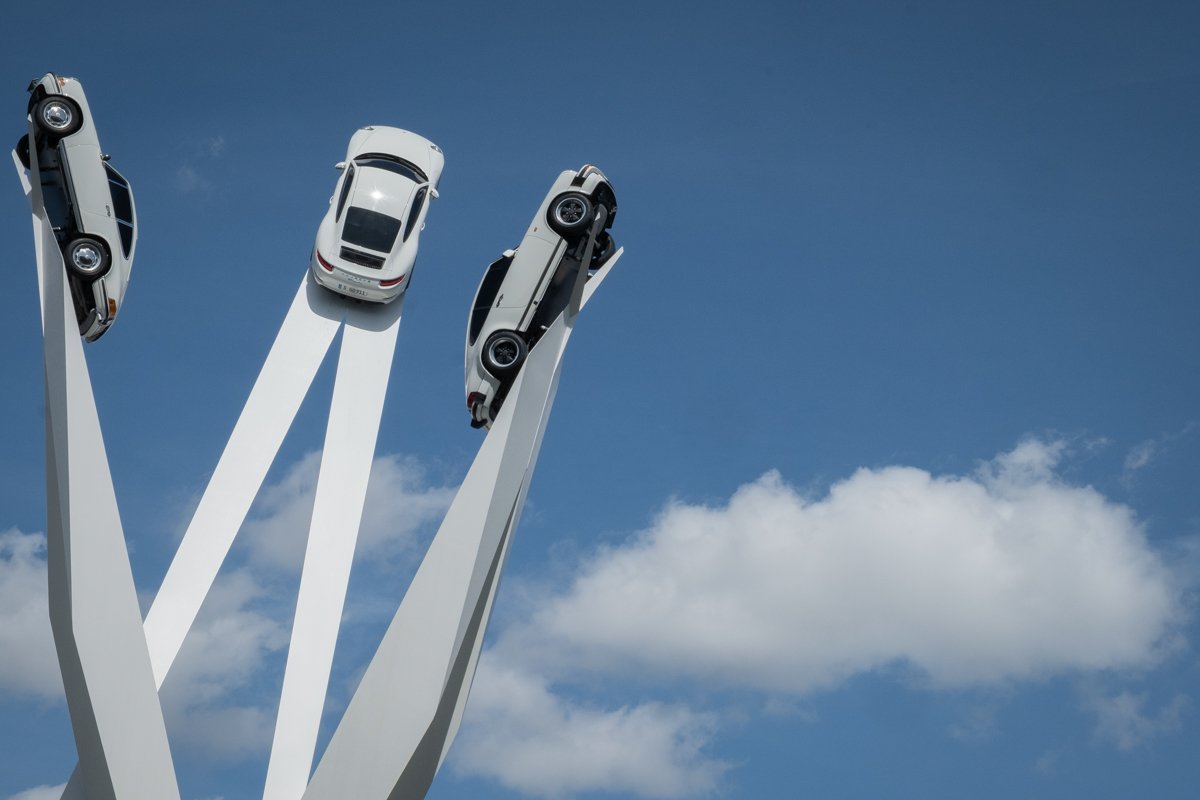
Even in a city famous for cars, the Porsche Museum stands out. More than 80 vehicles trace the evolution of the brand from early models to racing cars.
Compared with the Mercedes-Benz Museum, Porsche is more focused on design, engineering, and motorsport.
The building is worth a look too. Its one of Stuttgart’s most distinctive pieces of contemporary architecture.
Know before you go
- Allow: 2-3 hours
- Cost: €15 for adults
- Hours: Tuesday-Sunday, 9 am-6 pm. Closed Mondays
- Getting there: S-Bahn to Neuwirtshaus/Porscheplatz, directly beside the museum
- Pair it with: Weißenhof Estate and Killesberg for a north-Stuttgart sightseeing day
07. Shop at the Markthalle
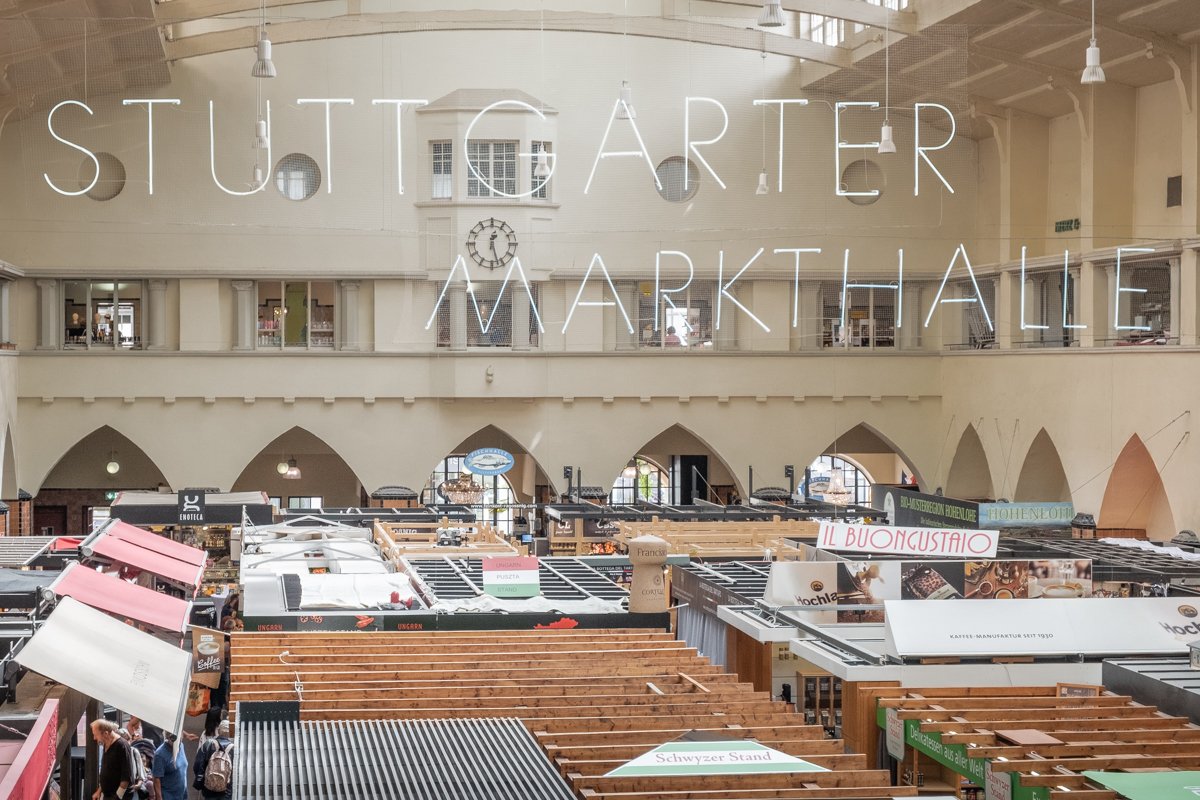
Steps from the Schlossplatz, the Art Nouveau Markthalle is one of the easiest places to get a taste of the city. Inside, you can find everything from Swabian specialties to ingredients from around the world. The building dates to 1914 and is a protected architectural landmark.
The best way to experience it is to browse the vendors.
I like the Markthalle as a midday break while exploring the historic center. You can walk in and have lunch or assemble a picnic and then continue sightseeing without going out of your way.
Know before you go
- Allow: 30-60 minutes
- Cost: Free to enter
- Hours: Monday-Friday 7:30 am-6:30 pm; Saturday 7am-5pm. Closed Sundays and public holidays.
- Getting there: U-Bahn to Schlossplatz
- Pair it with: Schlossplatz, Schillerplatz, the Altes Schloss, or a picnic in the Schlossgarten
08. Explore Wilhelma Zoological-Botanical Garden
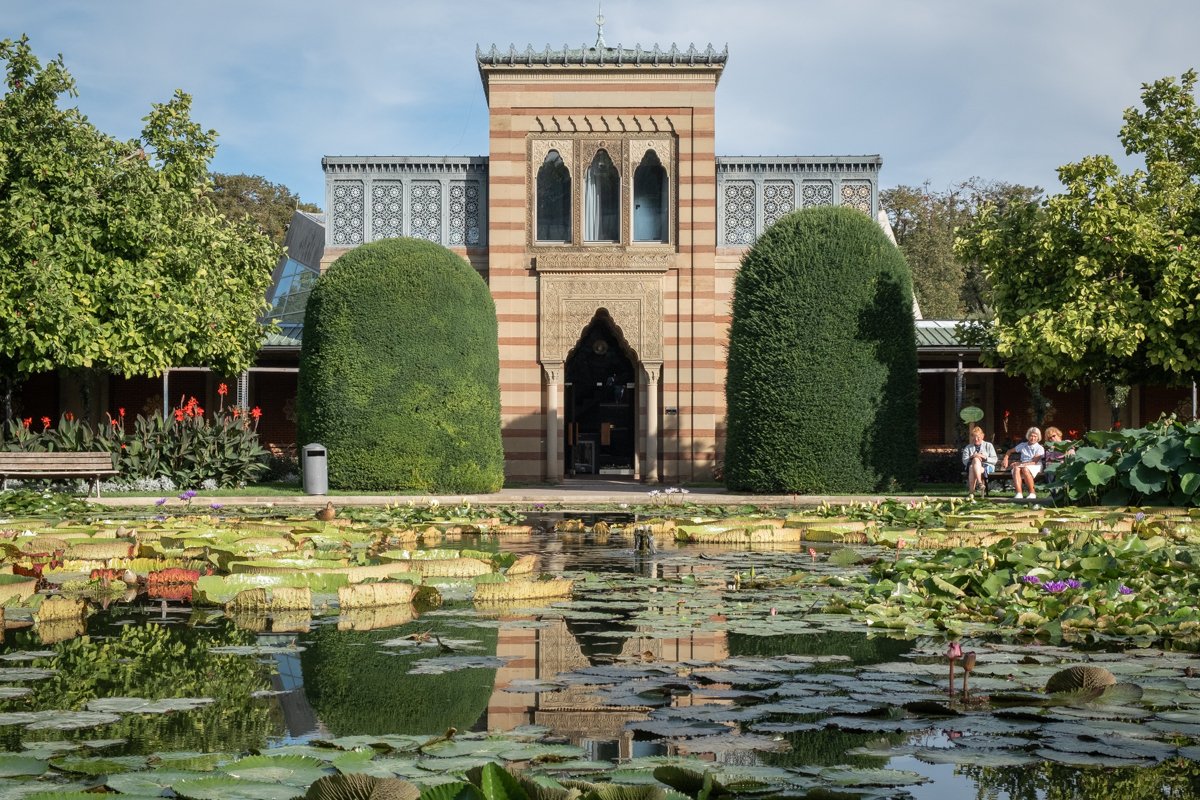
Wilhelma is much more than a zoo. It began as a private royal retreat for King Wilhelm I of Württemberg. He commissioned gardens, greenhouses, colonnades, and buildings inspired by Moorish architecture. The animals came later.
You can spend half a day exploring both the zoo and botanical gardens. Some of the prettiest areas are around the historic Moorish garden and greenhouses.
Know before you go
- Allow: 4-6 hours
- Cost: €23 for adults from March-October. Lower winter rates apply from November-February
- Best Time: Morning for quieter photographs or late afternoon for more atmosphere
- Getting there: Spring through summer for the gardens and blossoms
- Pair it with: Bad Cannstatt or one of Stuttgart’s nearby mineral baths
09. Explore the Weißenhof Estate
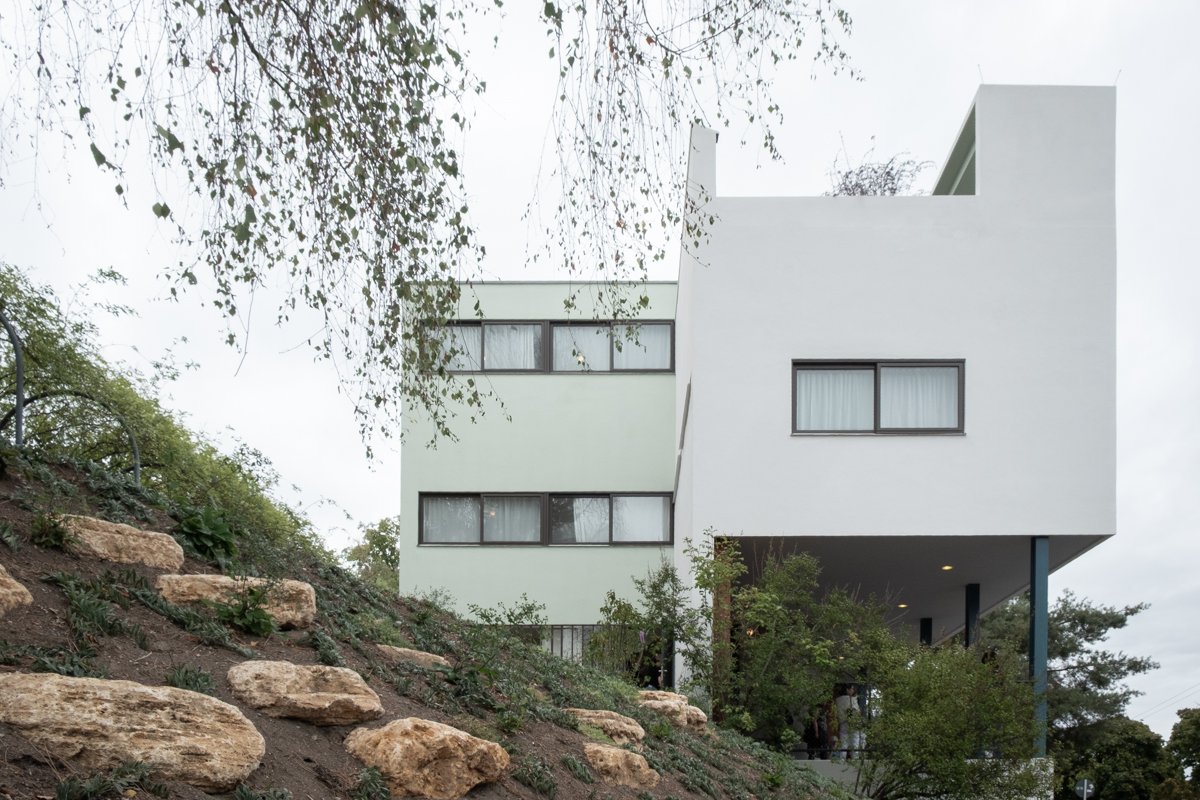
Weißenhof Estate is one of Europe’s most important collections of modernist architecture.
The neighborhood was built for a 1927 exhibition. Leading architects experimented with new ideas about how people should live. The result was a radically modern neighborhood of flat roofs, clean lines, and functional spaces.
The estate is a residential neighborhood. Walk the streets and look at the buildings from the outside. Then visit the Weißenhof Museum in the Le Corbusier House, the only house on the estate open to the public. Two of Le Corbusier’s buildings here are now part of the UNESCO World Heritage listing.
You don’t have to be an architecture enthusiast to appreciate how modern these houses still look.
Know before you go
- Allow: About an hour
- Cost: €6.50 for museum admission.
- Hours: Tuesday-Friday 11am-6 pm; weekends and public holidays, 10 am-6 pm. Closed Mondays
- Getting there: U5 to Killesberg or Bus 44 to Kunstakademie
- Pair it with: Killesberg Park and the Killesberg Tower
10. Relax in Stuttgart’s mineral baths
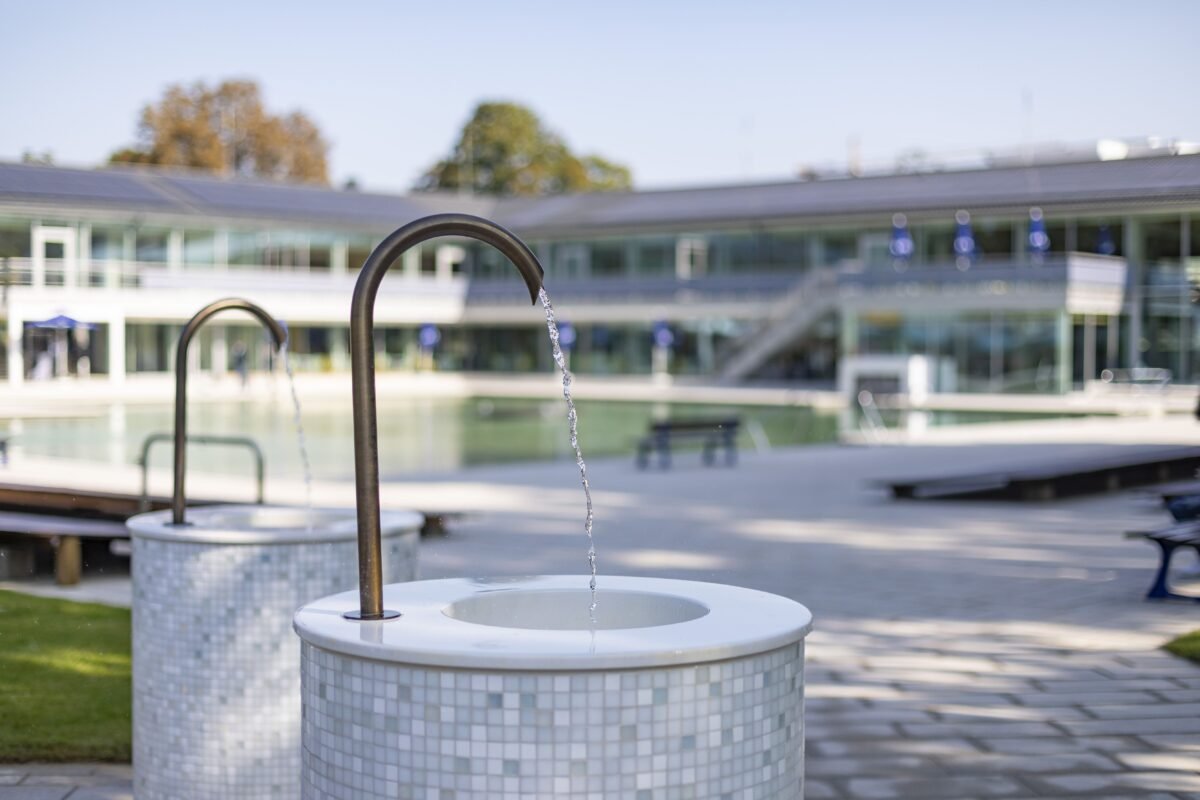
One of Stuttgart’s most overlooked experiences is hiding underground. Around 44 million liters of mineral water rise from the city’s springs every day. It’s one of the largest mineral-water resources in Europe, second only to Budapest.
The best way to experience it is to soak at one of the city’s mineral thermes. DAS LEUZE is the largest and liveliest, with indoor and outdoor pools, saunas, and a children’s area. For something quieter, SoleBad Cannstatt feels more like a traditional health spa. Mineralbad Berg has the most historic character with a distinctly old-school atmosphere and focus on traditional mineral bathing.
A visit to the mineral baths is a good counterpoint to a day spent walking Stuttgart’s hills.
Know before you go
Note: Mineralbad Berg is closed through 2026.
Allow: 3-4 hours
- Cost: Current admission is €15 for LEUZE. SoleBad Cannstatt is €14. Both have a €2 weekend/holiday surcharge
- When to go: : A rainy day, winter visit, or relaxing afternoon after sightseeing
- Getting there: SoleBad Cannstatt is at the Kursaal U-Bahn stop. LEUZE is at the Mineralbäder stop
- Pair it with: Wilhelma or Bad Cannstatt’s historic center
- What to know: Swimsuits are worn in the regular bathing areas, while German sauna areas are generally textile-free
Map of the best things to do in Stuttgart
Explore Schlossplatz and Stuttgart’s historic center
Mercedes-Benz Museum, 100, Mercedesstraße, Wasen, Bad Cannstatt, Stuttgart, Baden-Württemberg, 70372, Germany
Visit the Grabkapelle and the vineyards of Rotenberg
Ride the Zacke to Santiago-de-Chile-Platz
See Stuttgart from above at the Fernsehturm.
Visit the Porsche Museum.
Go shopping at the Stuttgart Markthalle
Visit the Wilhelma zoo and botanical garden
Visit the Weißenhof estate
Relax in the mineral water at one of Stuttgart’s mineral baths
More things to do in Stuttgart
If you have more time or want to explore beyond the main attractions, here are a few more things to do in Stuttgart that are worth the time.
Visit the Staatsgalerie Stuttgart
If you love art, make time for the Staatsgalerie Stuttgart. It’s home to works ranging from the Old Masters to major 20th-century artists. The museum is worth seeing for its architecture. It’s also a good addition for a rainy day.
Go inside the Altes Schloss
The Landesmuseum Württemberg is one of the best places to dig into Stuttgart’s past. The museum fills much of the Altes Schloss, the former home of Württemberg’s rulers. Its collection span archaeology, medieval art, royal treasures, weapons, and everyday objects.
Explore Killesberg Park
For a quiet day in the park, go to Höhenpark Killesberg. It’s one of Stuttgart’s prettiest green spaces. Wander through landscaped gardens, ponds, and open lawns. Climb the Killesberg Tower for views over the city. And if it’s running, ride the miniature railway. Killesberg Park is lovely in the warmer months and pairs well with the nearby Weißenhof Estate.
Visit Schloss Solitude
Schloss Solitude is an elegant 18th-century pleasure palace west of Stuttgart. Duke Carl Eugen built the palace in the 1760s. Even if you skip the guided tour, the palace grounds make it a worthwhile escape from Stuttgart. Pair it with a walk around the nearby Bärensee and end with a meal and drinks in the Bärenschlossle’s beer garden.
Step Inside the Stadtbibliothek
Stuttgart’s City Library is one of the city’s most photographed modern landmarks. The exterior is stark. But inside, a bright white atrium rises through several floors of books and galleries. You don’t need long here. Stop in if you’re nearby, take a look at the interior, and head up toward the rooftop terrace if it’s open.
Climb the Birkenkopf
The Birkenkopf is one of Stuttgart’s most unusual viewpoints. A short uphill walk leads to broad views across Stuttgart. But the fragments underfoot make this much more than another panorama. The city piled wartime rubble onto the Birkenkopf after World War II, raising the hill by about 40 meters. Pieces of destroyed buildings are still visible near the summit.
Ride the Standseilbahn to the Waldfriedhof
One of Stuttgart’s smallest and most charming transport experiences is the Standseilbahn. It is a historic wooden funicular that climbs through the forest to the Waldfriedhof. The ride takes only a few minutes but feels like a step back in time. At the top, take a peaceful walk through the wooded cemetery before riding back down.
Wander through Bad Cannstatt’s old town
Most visitors come to Bad Cannstatt for the Mercedes-Benz Museum or to go to the Wasen. But its historic center is worth a visit too. You’ll find half-timbered buildings, small lanes, and a quieter atmosphere than in the city center. It’s an easy add-on if you’re already spending part of the day on this side of the city.
Explore beyond Stuttgart
Stuttgart makes a great base for exploring the surrounding region. Within an easy day trip, there are worthwhile places to explore. Wander the old towns of Esslingen or Tübingen. Visit Ludwigsburg Palace. Hike around Bad Urach. Or head farther out to Hohenzollern Castle or the Black Forest. If you have an extra day, it’s worth looking beyond the city center.
Final thoughts: Is Stuttgart worth visiting?
Absolutely.
Stuttgart may not have the storybook old town of some German cities. But that’s part of what makes it interesting. Here, you’ll find palaces, world-class car museums, vineyards, and city views.
What I like most about Stuttgart, though, are the things beyond the obvious. Ride the Zacke into the hills. Walk through the vineyards above the city. Soak in a mineral bath. Visit the museums, but leave time for the experiences between them, too.
Stuttgart doesn’t fit neatly into the picture many travelers have of Germany. That’s exactly why it’s worth visiting.
