
A Gardener, the Police, and Daimler’s Secret Workshop
An inconspicuous garden house in Bad Cannstatt seems too modest for its history. Today it is the Gottlieb Daimler Memorial. But in the 1880s, noises from behind its locked doors set off one of the oddest episodes in automotive history.
Metal striking metal
The noises were difficult to ignore.
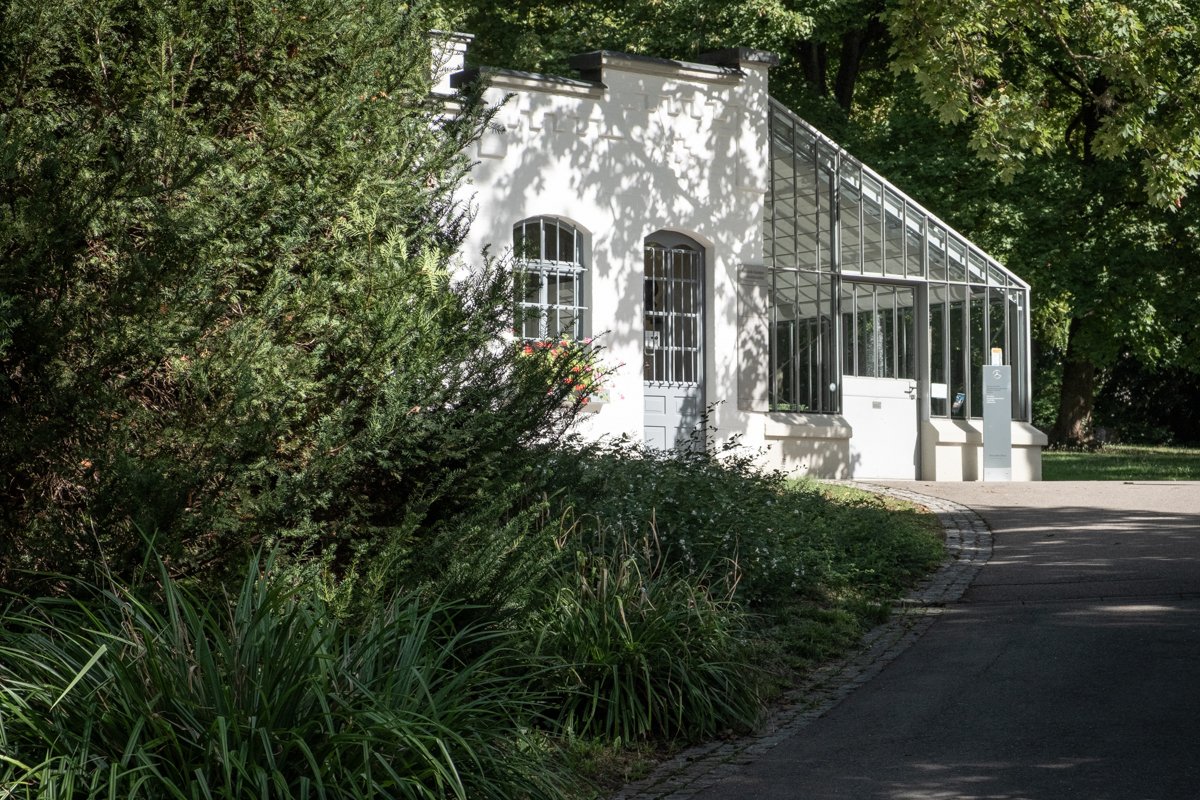
They came from the garden house. Knocking. Hammering. The sound of metal striking metal.
Gottlieb Daimler had recently purchased the estate. He converted part of the greenhouse into a workshop. A workbench was installed. So was a forge. And for some unknown reason, Daimler had the narrow paths through the garden widened.
Daimler and his colleague, Wilhelm Maybach, spent long stretches inside. Sometimes they worked late into the night. The people working on the estate were told almost nothing about what was happening inside. The windows were always covered and the door locked.
Whatever the two men were working on, they didn’t want anyone finding out what it was.
That included the gardener, Weinbuch.
Weinbuch tended the estate grounds. He couldn’t help noticing the two men’s strange comings and goings. Or the metallic sounds coming from inside the garden house.
A suspicion hardened into a theory. The noises sounded like the striking of coins. Perhaps this was a counterfeiting operation.
Weinbuch worried that staying silent could make him appear complicit in the crime. So he reported his suspicions to the police.1
The police investigate
This put the Cannstatt police in an awkward position.
Daimler was a wealthy and respected resident. Barging onto his property on the word of his gardener was not an insignificant thing to do. But they took the allegations seriously enough to investigate.
The police reportedly gave Weinbuch a piece of wax to make an impression of the workshop key. Then they could use it to make a duplicate.2
Late one night, two police officers arrived at the workshop. Using the key they had obtained for the purpose, they unlocked the door.
Inside, they found tools, mechanical pieces, and the equipment of a working metal shop. That proved very little. The police needed specific evidence.3
One essential piece of equipment was missing: the Stanze. The press needed to stamp coins. Without it, there could be no counterfeit mint.
The secret work inside the garden house
Daimler and Maybach’s secrecy wasn’t about hiding an illicit business from the law. They were hiding from their competitors.
Daimler had worked as the technical director of the Gasmotoren-Fabrik-Deutz near Cologne. Maybach was a talented designer and engineer who had worked with him there. After Daimler left Deutz in 1882, the two continued their work together in Cannstatt.
Daimler and Maybach believed there was enormous potential in producing a new kind of engine. They wanted to build something small, lightweight, and fast-running. An engine that could be installed in vehicles.
Behind the walls of the little workshop, the two men worked through the engineering problems to make their idea work.
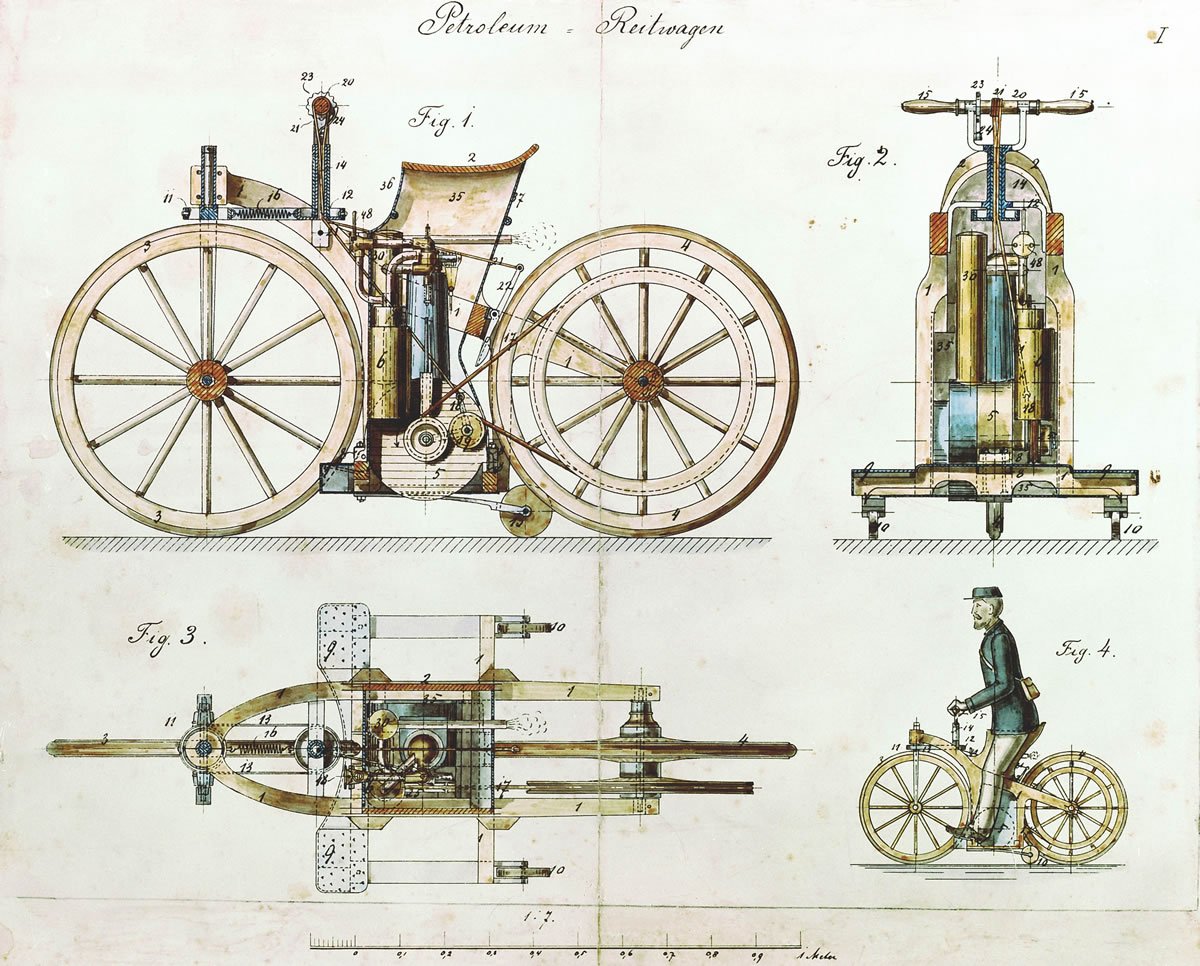
By 1883, they had produced a small high-speed experimental engine. An upright version followed, nicknamed the Grandfather Clock because of its distinctive shape. And by 1885, a smaller version of the engine left the garden house. They installed it in a wooden two-wheeled vehicle known as the Reitwagen.4
By 1886, when the motorized carriage came, the operation had grown beyond the workshop.
That decision Daimler had made soon after arriving—the widening of the garden paths—now made sense. The engine was never meant to stay in the garden house.
Weinbuch may have been wrong about the crime, but he had been right about the workshop. Something extraordinary was happening behind the locked door.
Whatever happened to the gardener?
Later accounts disagree about what happened to Weinbuch after the police investigation.
Haug gives the most colorful version. In his account, Weinbuch and the two police officers entered the workshop around midnight. They inspected the dark workshop by lantern light. But Daimler caught them in the act. Furious, Daimler fired Weinbuch. But several days later, he concluded the gardener had only been doing his civic duty and rehired him.
Another account tells a different ending. Hans Dieter Schaal writes that Daimler did not fire Weinbuch. And that the gardener continued working on the property.5
The workshop survived
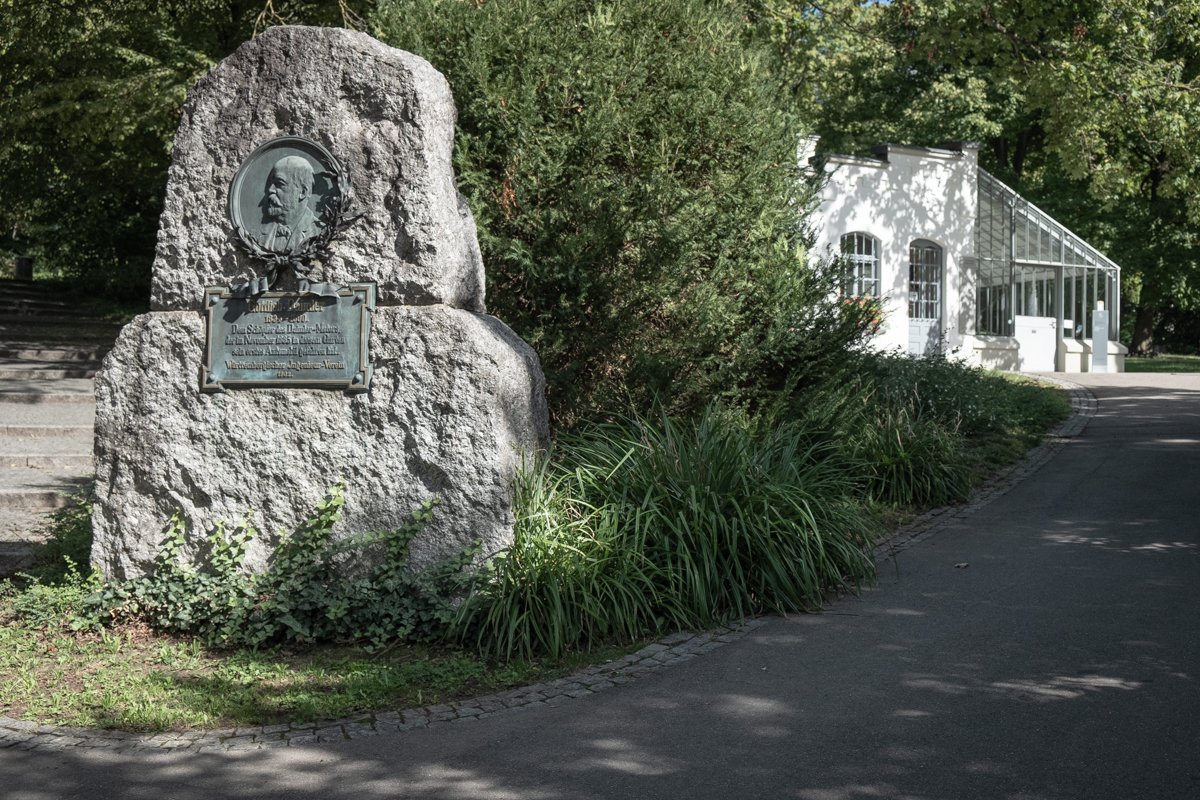
More than 140 years later, the most remarkable part of the story may be that you can still go to the place where it happened.
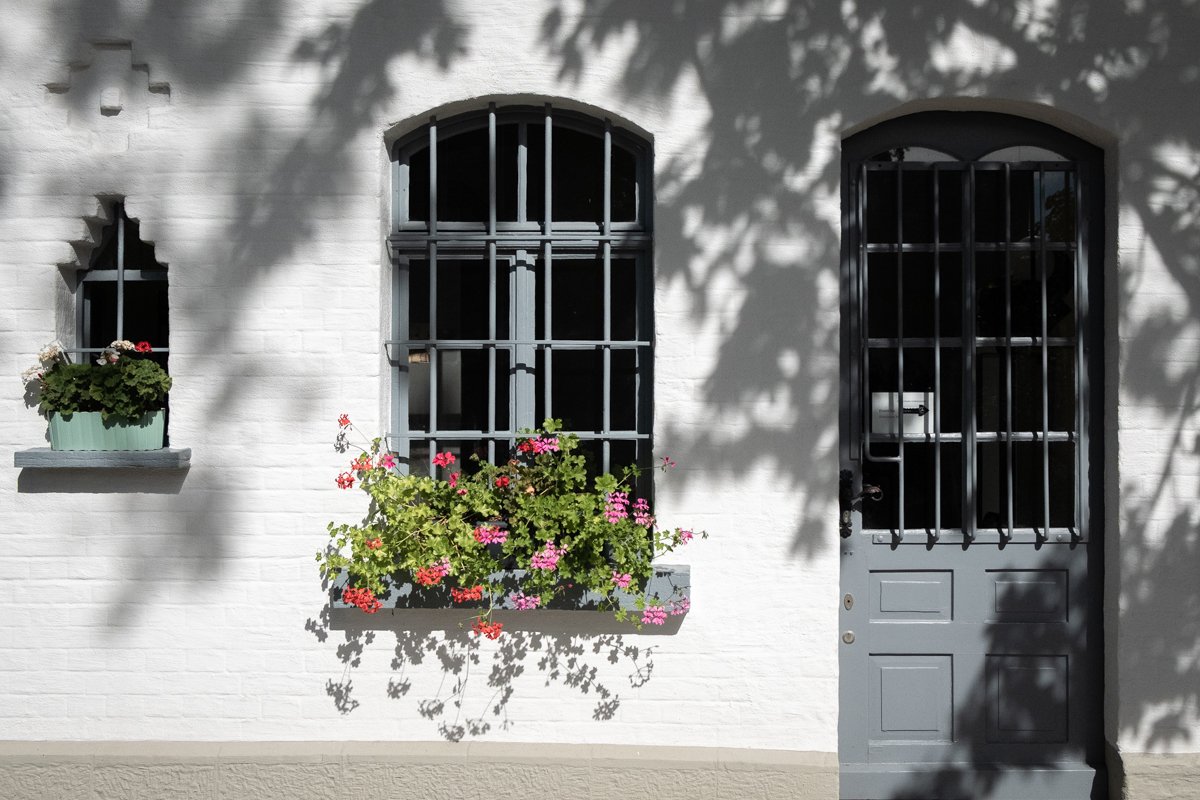
Walk through the Kurpark in Stuttgart-Bad Cannstatt. You will come to a little brick building with a greenhouse attached to it. Nothing about the place suggests the history made inside.
Today it is the Gottlieb-Daimler-Gedächtnisstätte, the Gottlieb Daimler memorial. The workshop was restored in 1984 and now contains a small museum.
The former garden house remains largely in its 1882 form. Inside are the workbench and displays relating to Daimler and Maybach’s experiments.
The Daimler estate around it has changed much more dramatically.
The house where Daimler lived until his death in 1900 was destroyed during the Second World War. Remains of its foundations and walls can still be found nearby the garden house.
Daimler’s villa is gone.
The suspicious little garden house survived.
Visit the Gottlieb Daimler Memorial in Bad Cannstatt
The surviving garden workshop is at Taubenheimstraße 13 in Stuttgart-Bad Cannstatt. Admission is free.
The memorial itself is small. That’s part of its appeal.
When I visited, the first thing I noticed was the smell: oil, grease, and old wood still linger in the room. It makes the tiny museum feel less like a memorial and more like an active workshop.
Don’t come here for a vast automobile collection. The Mercedes-Benz Museum does that a few kilometers away.
Here you can stand inside the building where Weinbuch once heard the sounds that convinced him a crime was underway. The police came looking for counterfeit coins. Instead, they found the secret work of Gottlieb Daimler and Wilhelm Maybach. Work that would soon carry the engine out of this little garden house and onto the road.
Read More
Planning a trip to Stuttgart? Explore our guides, itineraries, experiences, and stories to help you make the most of your visit.
The Best Things to Do in Stuttgart, Germany
Discover the best things to do in Stuttgart. Plan your visit, including automobile museums, vineyards, palaces, mineral baths, and panoramic views. If you’re visiting for the first time, these are my recommendations for the 10 best things to do in Stuttgart. I’ve also included a few more worthwhile stops if you have extra time.
How to Visit the Cannstatter Volksfest: A Guide to Stuttgart’s Wasen
Every autumn, the Cannstatter Wasen fills with beer tents, carnival rides, and around four million visitors. With Dirndls, Lederhosen, and Maßkrüge, it looks like Stuttgart’s answer to Oktoberfest. But the Cannstatter Volksfest has its own traditions and a different story behind it. Our guide covers when to go, how to choose and reserve a beer tent, what to eat, and what to see beyond the party.
Stuttgart Wine Country: An Easy Walk from Rotenberg to Uhlbach
Experience Stuttgart as a wine city from Rotenberg to Uhbach. This easy half-day vineyard walk includes the Grabkapelle, vineyard views, local wine and food, and Stuttgart’s Wine Museum.
- Mercedes-Benz, Daimler Garden House in Bad Canstatt.” Mercedes Benz’s historical account identifies the gardener as Weinbuch and states that he became suspicious after hearing knocking and metallic sounds, suspected Daimler and Maybach of counterfeiting coins, and reported his suspicions to a police officer. ↩︎
- Gunter Haug, “Schauplatz Cannstatt,” Blätter des Schwäbischen Albvereins (2012). Haug’s retelling says Weinbuch obtained an impression of the workshop key, allowing a duplicate key to be made before Weinbuch and two officers entered the workshop at night. Also that Daimler fired Weinbuch and later rehired him. ↩︎
- City of Stuttgart, “Gottleib Daimler Memorial.” The City of Stuttgart recounts that police investigating the suspected counterfeiting operation found tools and engine parts rather than a coin press. ↩︎
- Mercedes-Benz, “Daimler Garden House in Bad Cannstatt.” Daimler and Maybach conducted their secret engine experiments in the garden house and developed the first high-speed four-stroke engine there by 1883. Later developments included the 1885 “grandfather clock” engine and its use in the Reitwagen. ↩︎
- Hans Dieter Saal, Memorials: Betrachtungen über Denk-Male in unserer Zeit, citing Renate and Karl-Otto Völker’s Daimler biography. In this account, Weinbuch was not fired adn continued working as Daimler’s gardener. ↩︎
