
Stuttgart Wine Country: An Easy Vineyard Walk from Rotenberg to Uhlbach
You do not have to travel far from the center of Stuttgart before the city changes.
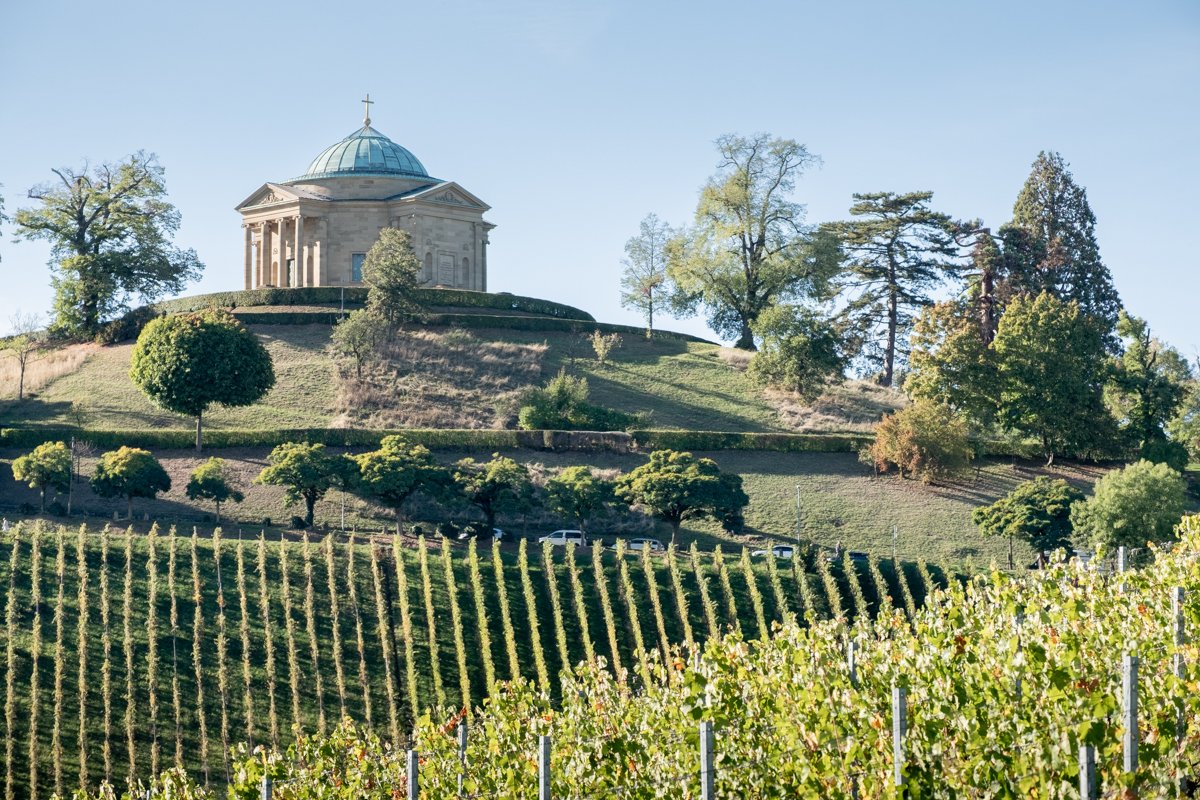
Apartment blocks give way to steep hillsides. Rows of vines climb above the Neckar. Small wine villages sit between them. High above it all stands the domed Grabkapelle auf dem Württemberg.
Around 420 hectares of vineyards remain within the city. One of the best ways to experience this side of Stuttgart is on foot.
This half-day route takes you from the Grabkapelle and the wine village of Rotenberg through working vineyards to Uhlbach. Along the way, you can eat Swabian food, drink local wine, and visit Stuttgart’s Wine Museum.
It follows one of the prettiest sections of Stuttgart’s official Weinwanderweg but skips most of the climbing. It’s also one of my favorite things to do in Stuttgart.
Easy Stuttgart wine walk at a glance
- Route: Rotenberg → Grabkapelle → Rotenberg → vineyards → Uhlbach
- Walking time: About 1½ hours, not including stops
- Time needed: About 4–5 hours with sightseeing, lunch, wine stops, and the museum
- Difficulty: Easy to moderate; mostly downhill
- Start: Rotenberg bus stop
- Finish: Uhlbach
- Best time: Late spring through autumn; I prefer an afternoon start
- Don’t miss: Grabkapelle terrace, vineyard views, a local wine, and the Wine Museum
- Getting back: Bus 62 from Uhlbach to Obertürkheim.
Why I walk this route in reverse
Stuttgart’s official Weinwanderweg between Obertürkheim, Uhlbach, Rotenberg, and Untertürkheim is about 10.7 km long. You can walk the whole thing. Or you can walk one of the prettiest sections and let a bus do most of the climbing.
The first time I explored this part of the wine trail, I drove to Uhlbach and headed uphill through the vineyards toward Rotenberg.
It was doable. But those hills are steeper than they look from below. After reaching Rotenberg, I had to double back and walk the route in reverse to get down to the car. Because I was driving, I also had to be careful about how much wine I tasted.
I like walking. But I am not a sporty person. The next time, I changed the plan.
I took public transportation uphill. I started in Rotenberg and walked down through the vineyards to Uhlbach. I also cut out a section of the official trail that added more walking without adding better scenery.
That is the version I recommend.
Half-day itinerary: explore Stuttgart’s wine country
Getting to Rotenberg
The easiest way to start this route is by public transportation.
Take the train to Untertürkheim and transfer to Bus 61 toward Rotenberg. As you approach Untertürkheim by train, look for the Grabkapelle above the vineyards.
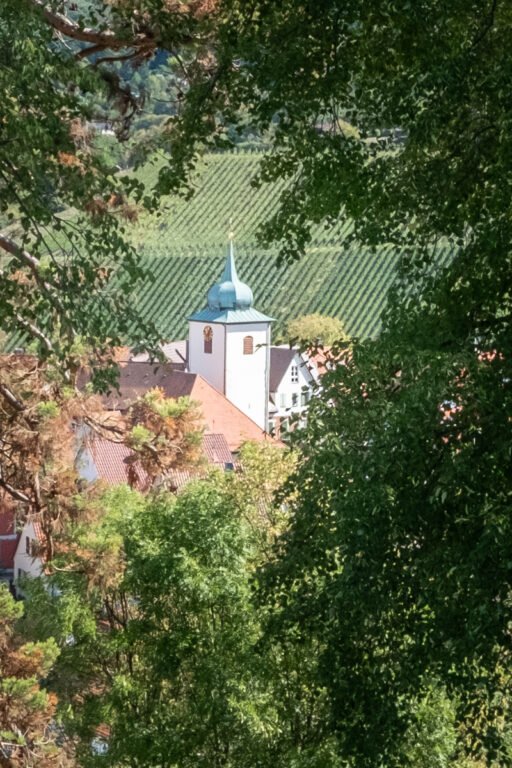
From Untertürkheim, the bus heads uphill through Stuttgart’s wine country toward Rotenberg. As soon as you leave town, you’re in the vineyards. Rows of vines cover the terraced hills, with Rotenberg above.
Optional stop: Collegium Wirtemberg
If you want to shop for wine before beginning the walk, get off near Collegium Wirtemberg’s vinothek. The Sonnenbühl stop is a short walk from the Collegium.
Collegium brings together around 100 local wine-growing families. Many of them cultivate vineyards around Rotenberg and Uhlbach. The vinothek sells wines from the cooperative, giving you an early opportunity to explore wines produced here.
I did not stop because it would have been too tempting to buy wine. Then I’d have to carry it the rest of the day.
From Collegium, you can walk uphill into Rotenberg. The climb is short but steep. If you would rather save your legs for the vineyards, catch the next bus toward Rotenberg.
Visit the Grabkapelle auf dem Württemberg

From the Rotenberg bus stop, follow the signs uphill toward the Grabkapelle.
This is the most noticeable climb of the itinerary, but it is short. It takes about six minutes to walk to the Grabkapelle from the bus stop. You may take longer, though. The views over Rotenberg are worth stopping for along the way.
When you reach the top, you’re rewarded with one of Stuttgart’s best views. The Grabkapelle sits high above the Neckar Valley, with vineyards falling away below. From the terrace, you can look across the landscape you are about to walk through.
This is more than a viewpoint.
King Wilhelm I commissioned the mausoleum after the unexpected death of his wife. Queen Katharina died in 1819. The chapel was built on the site of the Württemberg ancestral castle. Above the entrance are the words Die Liebe höret nimmer auf—love never ends.
It is easy to come here for the panorama and miss the royal love story built into the landscape.
If the chapel is open, go inside. I recommend taking the narrow staircase down to the crypt. Wilhelm and Katharina are both buried here.
Then walk around the chapel and take in the views. The rolling vineyards descend into Uhlbach, where you’re headed.
The chapel has seasonal opening hours and a small admission fee.
Optional wine stop: 1819 Bistro
Just below the Grabkapelle is 1819 Bistro am Wirtemberg. The name refers to 1819, the year Queen Katharina died.
The bistro serves Collegium Wirtemberg wines and a small seasonal menu. Its outdoor seating looks out over the surrounding vineyards.
Opening days vary by season. Unfortunately, 1819 was closed during my visit.
Have lunch above the vineyards
Head back downhill into Rotenberg.
Before sitting down to eat, stop at the small overlook near the bus stop. From here, you can see across Bad Cannstatt and Stuttgart.
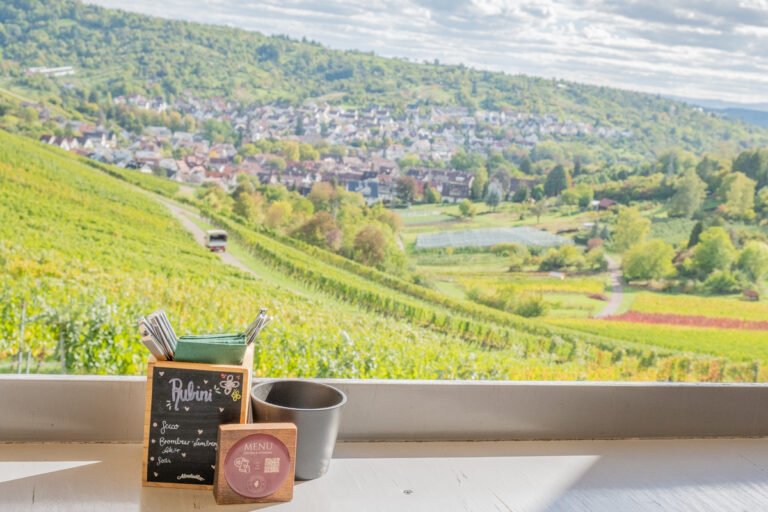
Then head to the Rotenberger Weingärtle for lunch. The restaurant sits across from the bus stop.
This turned out to be one of my favorite stops of the day. Behind the restaurant, a small terrace overlooks the vineyards toward Uhlbach.
The Rotenberger Weingärtle leans into a “WIR. VON HIER.”—“We. From Here.”—philosophy. It sources much of its food and wine from Stuttgart and the surrounding region.
The restaurant also offers smaller portions, a good option before an hour-long walk.
I ordered the Zwiebelrostbraten, roast beef with onions. It came with Lemberger wine sauce and homemade Spätzle. For the wine, I chose a local Trollinger from Weinhof Zaiß. The beef was tender and cooked to order. The sweet onions and wine sauce worked especially well with the homemade Spätzle. The Trollinger was a natural match for the meal.
The menu is seasonal, so I would not visit expecting this exact dish.
I recommend making reservations before you go. I was seated without a reservation, but the terrace tables were unavailable. As I was leaving, a bus full of people pulled up to the restaurant.
If you can, call ahead and ask for a table with a vineyard view.
Walk through the vineyards to Uhlbach
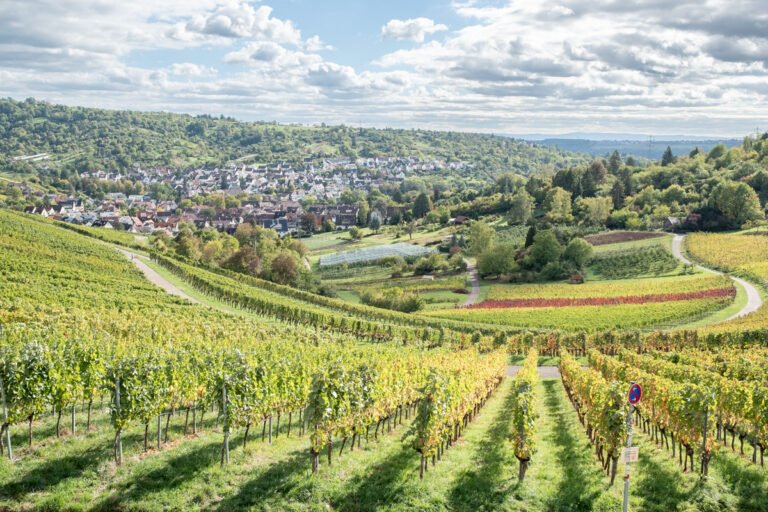
After lunch, step outside the restaurant.
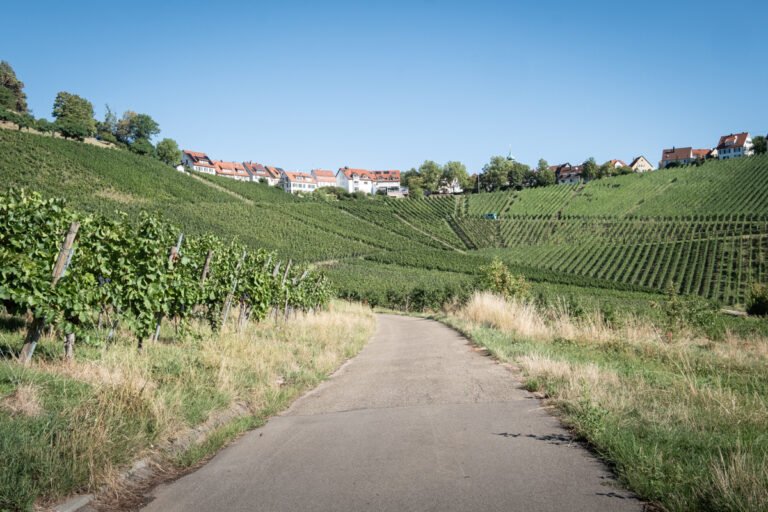
At the edge of Rotenberg, the houses begin to fall away and the vineyards open below you.
Take the stairs down to the street, turn left, and follow the road along the vineyard.
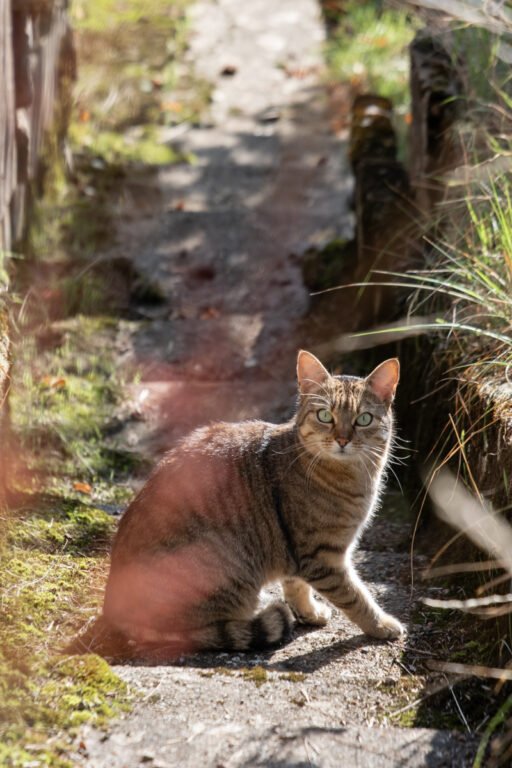
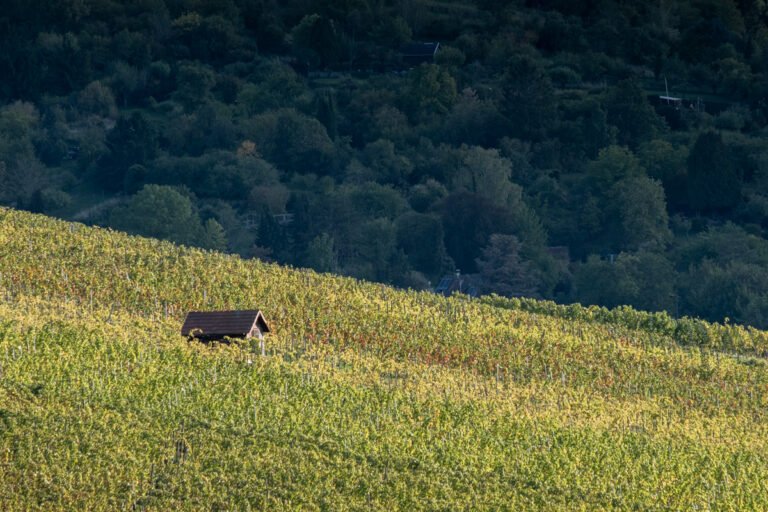
Narrow staircases climb up the steep hillsides. Little wine huts dot the landscape. Cats hunt between the rows of vines.
When I visited in late summer, the vines were loaded with grapes. By the time I returned a few weeks later, the grapes had been harvested, and the leaves were just starting to change. Later in autumn, the hills turn yellow and red.
The landscape changes with the seasons, but it is beautiful year-round.
A little farther along, the road reaches a bench beneath an apple tree and forks. Take the switchback and continue downhill toward Uhlbach.
Do not forget to turn around. Some of the best views are behind you. Look back toward Rotenberg and the Grabkapelle’s dome above the vines.
The vineyard roads intersect and switch back. I did not find obvious trail markers along the way. Keep the map open on your phone around the junctions. The tourism website has downloadable GPS data for the full trail.
As you approach Uhlbach, the official Weinwanderweg continues around the town toward the Götzenberg.
I walked that section too.
It was pleasant, but the best views were between Rotenberg and Uhlbach. That section offers unobstructed views of the Grabkapelle, Rotenberg above, and Uhlbach below. I recommend leaving the official trail here and continuing into town.
Make your way into the center of Uhlbach to Uhlbacher Platz.
Here, you’ll find Stuttgart’s Wine Museum.
Visit the Stuttgart Wine Museum
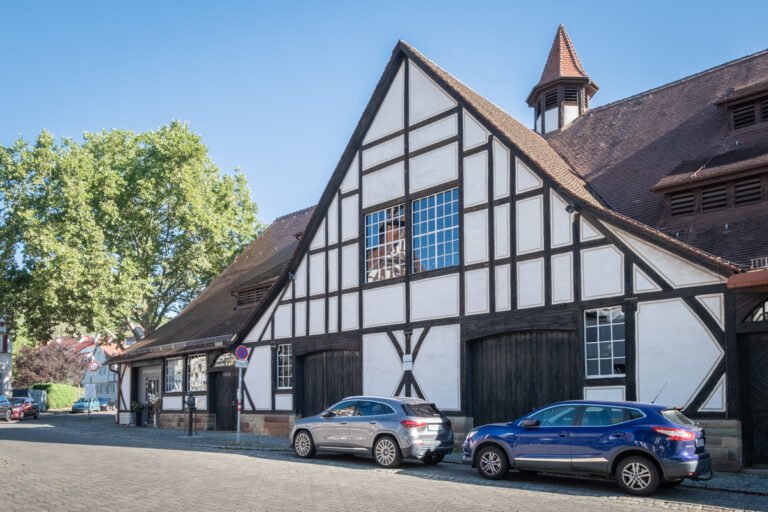
The Weinbaumuseum Stuttgart is in the historic Alte Kelter, the old communal wine press building.
Inside, the focus shifts from vineyard scenery to the people who worked these vineyards. Exhibits trace roughly 2,000 years of winegrowing, from cultivation and harvest to the work required on Stuttgart’s steep slopes.
An enormous old wine press dominates part of the museum. But my favorite exhibits were the elaborately carved wine barrels.
The museum is not open every day, so check current opening hours before choosing the date for your walk.
Optional stop: the Wine Museum Vinothek
The museum also has a vinothek offering Stuttgart wines from different producers. There is seating inside and outside. I stopped in to look around but did not taste the wine during my visit.
When you are ready to leave, take Bus 62 from Uhlbach toward Obertürkheim. The bus stop is in front of the cemetery near the town square. Then, from Obertürkheim, continue by train back to your accommodation.
Or keep the afternoon going.
Ways to extend your Stuttgart wine excursion
Check whether a Besenwirtschaft is open
A Besenwirtschaft is one of the most distinctive ways to experience wine culture.
Winegrowers operate these temporary wine taverns. They serve their own wines alongside simple regional food. But they are only open during limited times of the year.
Their temporary nature is part of the experience. It also means you cannot count on one being open.
Check the current Besen calendar before your walk. If one is open nearby, consider it a bonus. Ziegler’s Hofbesen is one option to look for in Uhlbach.
Stay for another glass at a Weinstube
If no Besen is open, Uhlbach also has traditional Weinstuben. These operate as regular restaurants.
One easy option is Weinstube Löwen, right beside the Wine Museum.
I enjoyed the vine-covered outdoor terrace. The wine list includes many local producers. The Swabian food also makes this a worthwhile stop. The Käsespätzle and fried potatoes are fantastic.
Continue walking to Obertürkheim
Still have energy? Instead of taking the bus, continue along the official wine trail toward Obertürkheim.
This adds a little over 2 km and takes you back through the vineyards before arriving at the station.
There is another climb, though.
When is the best time to walk Stuttgart’s vineyards?
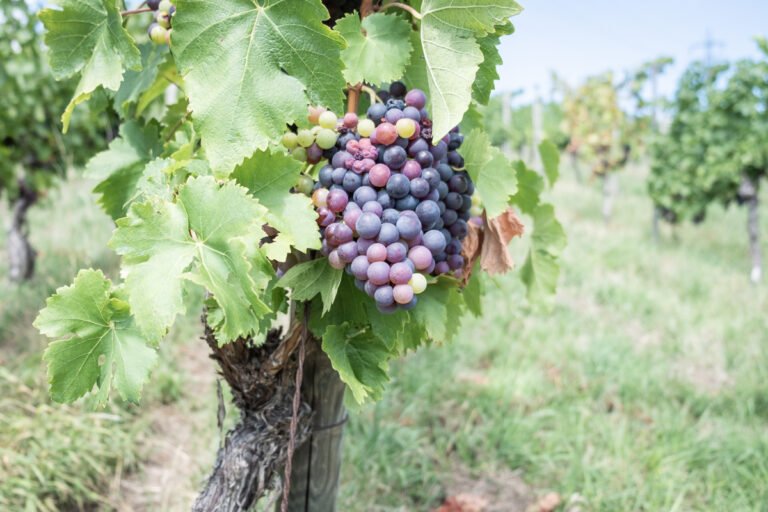
You can walk through Stuttgart’s vineyards year-round, but I would choose late spring through autumn. Late summer into fall is my favorite time. You can see grapes on the vines, harvest activity, and eventually autumn color.
I also prefer an afternoon start. If you walk in the morning instead, plan to have lunch after reaching Uhlbach.
Is this Stuttgart vineyard walk difficult?
Not this version.
The full vineyard route includes much more climbing. Starting in Rotenberg lets you walk the most scenic section, mostly downhill.
That does not mean it is flat.
There is a climb from Rotenberg to the Grabkapelle, and the vineyard roads rise and fall in places. Some downhill sections can also feel a little steep.
The route is on paved roads and vineyard paths.
If you want more of a challenge, reverse the itinerary or walk the full Weinwanderweg.
FAQ: walking through Stuttgart’s vineyards
How long is Stuttgart’s Weinwanderweg?
The official route is about 10.7 km and takes roughly three hours of walking without long stops. The route links Obertürkheim, Uhlbach, Rotenberg, and Untertürkheim.
Can you do a shorter version?
Yes. My preferred route starts in Rotenberg with a visit to the Grabkapelle before following the vineyards downhill to Uhlbach. It is roughly 1–1½ hours of walking, depending on the exact vineyard roads you take and how often you stop to enjoy the views.
Can you taste wine along the route?
Yes. Possible stops include Collegium Wirtemberg, the Wine Museum vinothek, local Weinstuben, and seasonal Besenwirtschaften.
What is a Besenwirtschaft?
A Besenwirtschaft is a temporary wine tavern operated by a winegrower. It opens only during limited periods and serves the producer’s own wine with regional food.
Do I need hiking shoes?
No. The route follows paved vineyard roads. Comfortable walking shoes with good traction should be enough.
Final thoughts: Stuttgart is a wine city
Stuttgart is easy to reduce to cars, museums, and Schlossplatz.
From the top of the Württemberg, it looks like a completely different city.
That is what I like about this route.
Vineyards tumble toward the Neckar. Wine villages sit between the hills. A royal love story is written into the landscape. The vines are not just scenery. They still produce grapes for wines you can drink a few hundred meters away.
Start above the vineyards at the Grabkapelle. Eat beside them in Rotenberg. Walk through them on the way to Uhlbach. And at the Wine Museum, learn a little more about the landscape you have been looking at all afternoon.
Take the bus up. Walk down. Stop for the views. Taste the wine. And if a Besen is open, go in.
You don’t have to walk the entire Weinwanderweg to experience Stuttgart as a wine city.
Keep exploring Stuttgart
Planning a trip to Stuttgart? Explore our guides, itineraries, experiences, and stories to help you make the most of your visit.
The Best Things to Do in Stuttgart, Germany
Discover the best things to do in Stuttgart. Plan your visit, including automobile museums, vineyards, palaces, mineral baths, and panoramic views. If you’re visiting for the first time, these are my recommendations for the 10 best things to do in Stuttgart. I’ve also included a few more worthwhile stops if you have extra time.
How to Visit the Cannstatter Volksfest: A Guide to Stuttgart’s Wasen
Every autumn, the Cannstatter Wasen fills with beer tents, carnival rides, and around four million visitors. With Dirndls, Lederhosen, and Maßkrüge, it looks like Stuttgart’s answer to Oktoberfest. But the Cannstatter Volksfest has its own traditions and a different story behind it. Our guide covers when to go, how to choose and reserve a beer tent, what to eat, and what to see beyond the party.
A Gardener, the Police, and Daimler’s Secret Workshop
A gardener heard mysterious noises coming from a locked garden house in 1880s Cannstatt and summoned the police. He suspected a counterfeiting operation. Instead, he had stumbled upon the secret experiments that would help change transportation forever.
